7 Proven Ways to Manage Drawdown: Protect Your Trading Capital
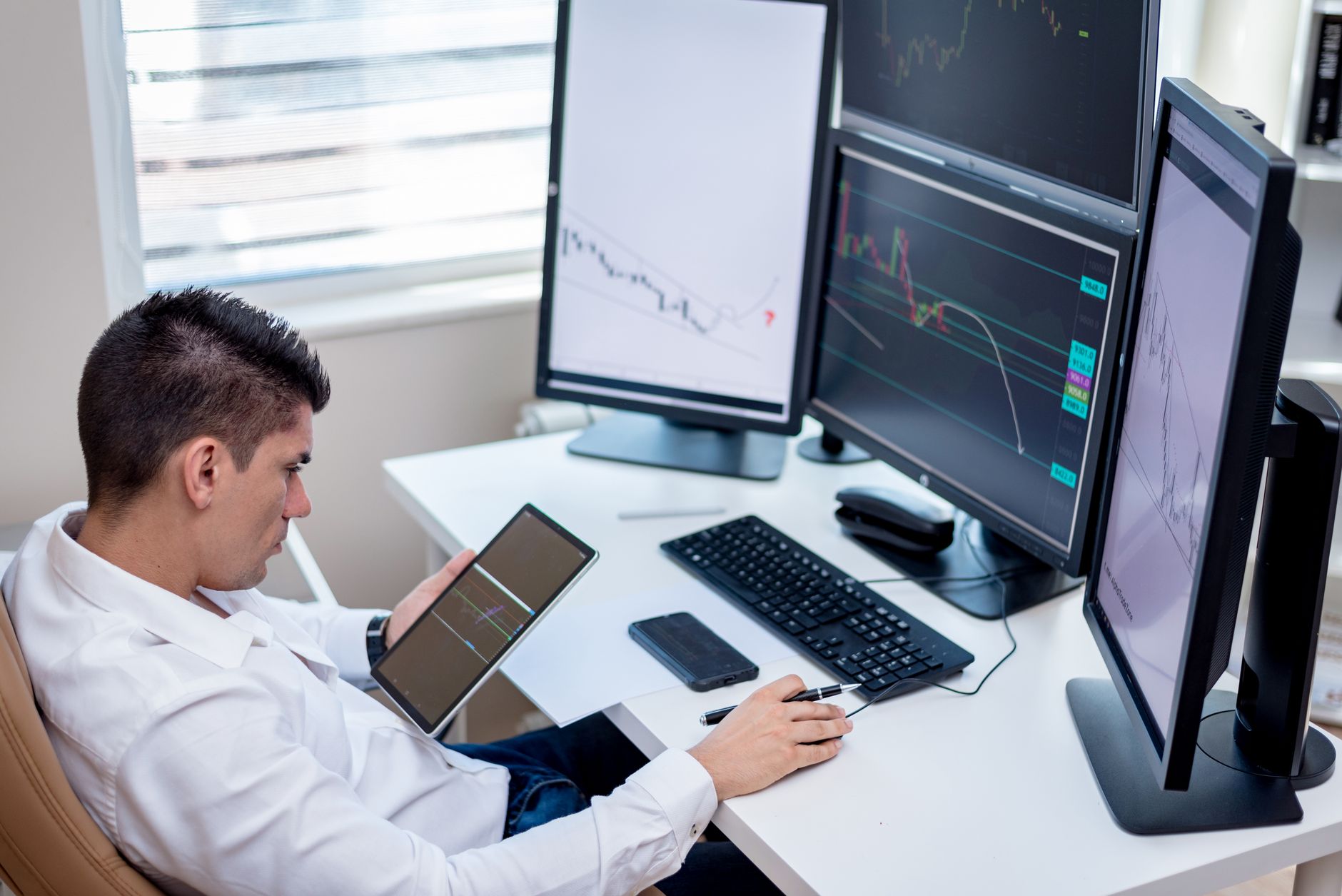
Managing drawdown in trading involves a combination of robust risk management, disciplined psychological control, and precise performance analysis to mitigate capital reductions from peak equity. Effective drawdown management is not just about reacting to losses, but proactively structuring your trading approach to absorb inevitable market fluctuations and protect your account's longevity.
- Implement strict risk-per-trade rules to limit potential losses.
- Develop psychological resilience to navigate losing streaks without emotional decisions.
- Accurately track maximum drawdown using verified broker data for insights.
- Adjust position sizing dynamically based on account equity and volatility.
- Regularly review trade performance to identify and correct loss mechanisms.
Understanding Drawdown: Why It's Critical for Traders
Drawdown represents the peak-to-trough decline in the value of a trading account during a specific period, measuring the reduction from a high point to a subsequent low point before a new peak is achieved.
For any trader operating a funded account or managing capital for others, understanding and managing drawdown is paramount. It’s not just an abstract metric; it directly impacts your capital preservation, psychological well-being, and ability to meet the requirements of prop firms or investors. The most commonly discussed form is 'maximum drawdown,' which is the largest percentage or dollar drop from a peak in your equity curve to a subsequent trough. For a deeper dive into the definition, Investopedia provides a comprehensive explanation of drawdown.
While some sources might refer to 'pension income drawdown,' for traders, the term exclusively refers to the temporary loss of capital within a trading account. High drawdown figures can signal excessive risk, an ineffective strategy, or poor trade management. Conversely, well-managed drawdown demonstrates control, discipline, and a sustainable approach to trading, which is highly valued by prop firms and investors assessing your track record.
Why Max Drawdown is a Key Performance Indicator
Maximum drawdown is a critical metric because it quantifies the worst-case scenario your account has experienced. It tells you, and anyone evaluating your performance, the largest amount of capital you've risked or lost relative to your highest point. For example, if your account reaches $10,000, then drops to $8,000 before recovering, you've experienced a 20% drawdown. This figure is often a non-negotiable threshold for prop firms, which set strict limits to protect their capital. Exceeding these limits typically results in account termination.
The Trader's Mindset: Navigating Drawdown Psychologically
Effectively managing drawdown requires not only robust technical strategies but also a strong, disciplined psychological framework to prevent emotional decisions from compounding losses.
Drawdowns are an inevitable part of trading. No strategy wins 100% of the time, and losing streaks will occur. The real challenge often isn't the monetary loss itself, but the psychological toll it takes. Frustration, fear, and a desire for 'revenge trading' can cloud judgment, leading to impulsive decisions that deepen the drawdown. We often see this pattern in trading records where a series of small, manageable losses are followed by one or two significantly larger losses, often driven by emotional reactions.
Strategies for Mental Resilience During Drawdown
-
Accept Losses as Inevitable: Understand that every trader, no matter how successful, experiences drawdowns. It's part of the business. This acceptance helps detach emotion from individual losing trades.
-
Focus on Process, Not Outcome: During a drawdown, it's easy to obsess over the declining equity. Instead, focus on executing your trading plan flawlessly. Are you following your risk rules? Are your entry and exit criteria being met? A consistent process, even during losses, builds confidence.
-
Take a Break: If emotions run high, step away from the charts. A short break, an hour, a day, or even a week, can provide mental clarity and prevent impulsive trades. Returning with a fresh perspective often leads to better decisions.
-
Review Objectively: Use your trading journal and analytics platform to review trades without judgment. Identify patterns in your losses. Are they clustered around specific times, instruments, or news events? MyVeridex's auto-synced journal and session breakdowns can highlight these patterns, providing data-driven insights rather than emotional blame.
Proactive Strategies to Mitigate Drawdown
The most effective way to manage drawdown is to implement robust risk management strategies and a disciplined trading plan before ever placing a trade.
Preventing deep drawdowns is always preferable to recovering from them. This involves setting clear boundaries and rules for every trade you take. These strategies focus on controlling the size of potential losses and ensuring that no single trade or series of trades can cripple your account.
Key Proactive Measures:
-
Fixed Percentage Risk Per Trade: Never risk more than a small, fixed percentage of your account balance on any single trade. A common guideline is 1% to 2%. For example, with a $10,000 account and a 1% risk, your maximum loss on one trade is $100. This approach ensures that even a string of losses won't decimate your capital.
-
Mandatory Stop-Loss Orders: Always use a stop-loss order to define your maximum acceptable loss on a trade. This is your ultimate protection against unexpected market moves. Without a stop-loss, a single volatile event can lead to catastrophic losses that are extremely difficult to recover from.
-
Precise Position Sizing: Your position size should always be calculated based on your risk percentage and the distance to your stop-loss. This ensures that the actual dollar amount risked remains consistent. Our Position Size Calculator can help you determine the correct lot size for your desired risk per trade and stop-loss distance.
-
Develop and Stick to a Trading Plan: A well-defined trading plan outlines your strategy, entry/exit rules, risk parameters, and market conditions for trading. Adhering to this plan minimizes impulsive decisions. Your plan should also include rules for when to reduce trading activity or step away during adverse market conditions or personal stress.
-
Understand Correlation: Be aware of how different assets or currency pairs move in relation to each other. Trading multiple correlated instruments simultaneously can inadvertently increase your overall risk beyond your intended limits, effectively creating a larger position in a single underlying theme.
Reactive Drawdown Management: Adjusting Your Approach
When an account is already in drawdown, reactive management involves making calculated adjustments to your trading behavior and strategy to minimize further losses and facilitate a recovery.
While proactive measures aim to prevent deep drawdowns, even the best traders will face periods of declining equity. How you react in these situations is critical. Panicking or doubling down on losing positions are common pitfalls that can turn a manageable drawdown into an irreversible capital loss. The CFTC emphasizes the importance of risk management in all trading activities, especially during adverse market conditions.
Steps for Reactive Drawdown Management:
-
Temporary Trading Halt: Define specific drawdown thresholds (e.g., a 3% daily drawdown, a 10% weekly drawdown). If these are hit, stop trading immediately. This 'time-out' prevents emotional trading and allows for objective analysis.
-
Comprehensive Strategy Review: Use your trading analytics to perform a deep dive into recent losing trades. Ask:
- Have market conditions fundamentally changed? (e.g., new economic regime, increased volatility).
- Is my strategy's edge still valid in the current environment?
- Am I deviating from my trading plan?
- Are there specific instruments or times of day where losses are concentrated? MyVeridex's pair and session breakdowns are invaluable for this.
-
Reduce Position Size: If you decide to resume trading after a review, consider scaling down your position sizes temporarily. This allows you to regain confidence and test market conditions with less capital at risk, making it easier to recover from any further small losses.
-
Focus on High-Probability Setups: During recovery, be extremely selective. Only take trades that perfectly align with your highest-conviction setups. Avoid marginal trades that you might take during periods of higher confidence.
Precision in Tracking: The Foundation of Drawdown Management
Accurate and objective tracking of your trading performance, especially drawdown, is not just beneficial; it is absolutely essential for effective management and for proving your capabilities to prop firms or investors.
Many traders rely on manual journaling or simple spreadsheet calculations, which are prone to errors and lack the real-time, verified nature required for serious performance analysis. Competitors often speak vaguely about "identifying loss mechanisms," but without precise, broker-verified data, this remains a subjective exercise. MyVeridex bridges this gap by connecting directly to your trading account via investor password (read-only), supporting platforms like MT4, MT5, cTrader, DXTrade, Match-Trader, and TradeLocker.
How MyVeridex Empowers Precise Drawdown Tracking:
-
Broker-Verified Data: MyVeridex pulls your real trade history directly from your broker, ensuring that all performance metrics, including maximum drawdown, are accurate and tamper-proof. This verification is crucial for building trust with prop firms and investors.
-
Comprehensive Drawdown Metrics: Beyond just maximum drawdown, MyVeridex provides an array of performance metrics that offer a holistic view of your account health. This includes daily drawdown, rolling drawdown, and other related statistics that provide granular insights into how and when your capital is being affected.
-
Prop Firm Drawdown Tracking: Prop firms often have specific and strict drawdown rules (e.g., daily drawdown limits, overall maximum drawdown from initial balance or highest equity). MyVeridex allows you to monitor your performance against these specific rules, helping you stay compliant and avoid account violations. You can use our Prop Firm Calculator in conjunction with your MyVeridex analytics to simulate scenarios and understand your limits.
-
Automated Journaling: Every trade is automatically logged and categorized, eliminating manual entry errors. This means your drawdown figures are always current and based on your actual closed trades, not estimates or forgotten entries.
Beyond Drawdown: Connecting Metrics for Sustainable Growth
While managing drawdown is vital, it should not be viewed in isolation; its true significance emerges when analyzed in conjunction with other key performance metrics for a comprehensive understanding of trading efficacy.
A low drawdown is desirable, but if it comes at the cost of negligible returns, it's not a sustainable trading approach. Conversely, a strategy with occasional higher drawdowns might still be highly profitable if its profit factor and expectancy are strong. It's about finding the right balance for your risk tolerance and trading goals.
Integrating Drawdown with Other Metrics:
-
Profit Factor: This ratio (gross profit / gross loss) indicates how much profit you're making for every dollar you lose. A high profit factor (e.g., above 1.5-2.0) can justify a slightly higher drawdown if the strategy consistently generates more profit than loss. MyVeridex computes this directly from your closed trades.
-
Expectancy: The average amount you can expect to win or lose per trade. A positive expectancy indicates a profitable edge. Understanding your expectancy helps you accept drawdowns as part of a statistically sound process.
-
Consistency Score: MyVeridex's unique consistency score provides an objective measure of how consistently you apply your strategy and generate returns. Frequent, deep drawdowns will negatively impact your consistency, signaling erratic performance.
-
R-Multiple: This metric expresses the profit or loss of a trade as a multiple of the initial risk. Tracking R-multiples helps you understand if your winning trades are large enough to cover your losing trades and contribute positively to your overall equity, even during drawdown periods.
By analyzing drawdown alongside these metrics, traders can identify whether a drawdown is a temporary blip in an otherwise robust strategy or a symptom of deeper issues. MyVeridex provides all these metrics, computed from your real broker data, giving you the full picture.
Leveraging Verified Analytics for Drawdown Control and Growth
For serious traders aiming to prove their results, track consistency, or manage accounts for others, a dedicated analytics platform like MyVeridex offers unparalleled precision and insight into drawdown management.
Manual journaling and ad-hoc calculations simply cannot provide the depth, accuracy, or verification that prop firms and investors demand. MyVeridex is built precisely for this customer, offering a modern alternative to established track-record sites by focusing on verified data and comprehensive analytics. We support a wide range of popular platforms, including MT4, MT5, cTrader, DXTrade, Match-Trader, and TradeLocker, connecting securely via investor password (read-only) to protect your account.
Why MyVeridex is Your Partner in Drawdown Management:
-
Verified Track Records: Build a public profile or generate investor reports with drawdown figures and other performance metrics that are verified directly from your broker data. This transparency is crucial for attracting capital or passing prop firm evaluations.
-
Granular Drawdown Tracking: Instantly see your maximum drawdown, daily drawdown, and other relevant metrics. Identify exactly when and where your account experienced its largest declines through detailed equity curve analysis.
-
Automated Performance Journal: Say goodbye to manual data entry. Every closed trade is automatically synced and analyzed, giving you an always up-to-date view of your performance without any extra effort.
-
30+ Performance Metrics: Gain deep insights into your trading edge with metrics like win rate, profit factor, expectancy, R-multiple, Sharpe, Sortino, Calmar ratios, and a unique consistency score. These metrics, alongside drawdown, help you understand the true health of your strategy.
-
Session and Pair Breakdowns: Pinpoint the exact conditions under which your drawdowns occur. Are you struggling with specific currency pairs or during particular trading sessions? MyVeridex helps you identify these patterns to refine your strategy.
Whether you're looking to track drawdown and consistency on your current accounts, prove your results to a prop firm or investor, or replace manual journaling, MyVeridex provides the tools you need. Our plans range from Starter to Business, with a 7-day free trial available on every plan.
Ready to take control of your trading performance and manage drawdown effectively? Start free trial →
What is the difference between relative and absolute drawdown?
How often should I review my drawdown?
Can I recover from a large drawdown?
How do prop firms calculate drawdown?
Is drawdown always bad?
Track your trades like a professional
Connect any MT4, MT5, cTrader, DXTrade, Match-Trader or TradeLocker account — get 30+ metrics and a verified public track record.
Start Free 7-Day Trial