Master Prop Firm Drawdown: 3 Critical Rules Explained
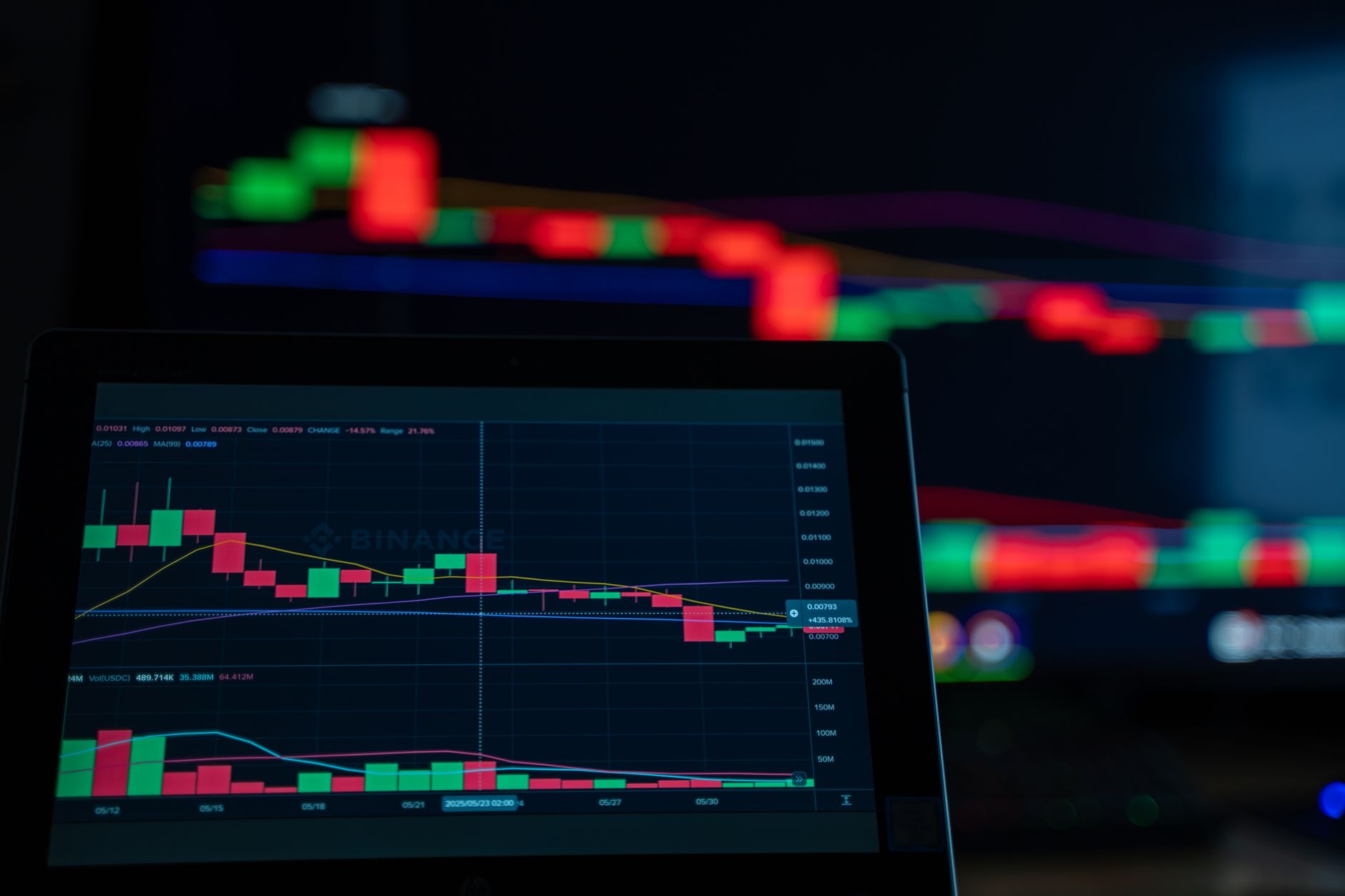
Prop firm drawdown is a critical risk management rule that limits your maximum permissible loss, designed to protect both the firm's capital and your trading discipline. Understanding its specific calculation method, whether based on equity or balance, is essential for any trader aiming to succeed with a funded account.
- Prop firm drawdown defines the maximum loss allowed before account closure.
- Three main types exist: static, end-of-day, and trailing drawdown.
- Trailing drawdown often moves with unrealized profits, increasing its challenge.
- Effective tracking is vital for staying within limits and proving consistency.
- Choosing a prop firm requires understanding their specific drawdown methodology.
What Exactly is Prop Firm Drawdown?
Prop firm drawdown represents the maximum permissible loss a trader can incur on a funded or challenge account before the account is automatically closed. This rule is a cornerstone of risk management for proprietary trading firms, ensuring that their capital is protected while also fostering disciplined trading habits among their funded traders. When your account's equity or balance falls below a predefined threshold, the firm's system will typically close all open positions and terminate the account, requiring you to restart the evaluation or lose access to the funded capital.
For traders, understanding what is prop firm drawdown is not merely an academic exercise; it's a practical necessity that directly impacts their ability to maintain a funded account and achieve profitability. Ignoring or misinterpreting these rules can lead to abrupt account termination, regardless of a trader's overall skill or potential. We see many traders who are highly profitable but struggle with drawdown rules because they don't track them precisely.
The 3 Main Types of Prop Firm Drawdown
Proprietary trading firms employ several methods to calculate drawdown, each with distinct implications for a trader's strategy and risk management. While the core concept of limiting losses remains, the nuances of these calculations can significantly alter how you approach your trades and manage your open positions.
Static Drawdown (or Initial Balance Drawdown)
Static drawdown, sometimes called initial balance drawdown, is the simplest form, where the maximum loss limit is fixed at a percentage or absolute amount of your initial account balance. This drawdown level does not change, regardless of your profits or losses. For example, if you start with a $100,000 account and have a 5% static drawdown, your account would be closed if your equity ever drops below $95,000. Even if you make $10,000 in profit, your maximum drawdown limit remains at $95,000, not $95,000 plus your profits. This type offers clear, unchanging boundaries, which can be less psychologically taxing than other types.
End-of-Day Drawdown
End-of-day drawdown bases the maximum loss limit on your account's balance at the close of each trading day. This means your drawdown threshold can adjust upwards if you end the day in profit. For instance, if your account starts at $100,000 with a 5% drawdown ($95,000 limit) and you close the day with $102,000, your new drawdown limit might move up to $96,900 (5% below the new high balance). However, if you are in a floating loss during the day, the drawdown is usually still calculated from the previous day's closing balance, not moving against you until the day closes. This method can offer more flexibility than static drawdown, allowing successful traders to see their risk buffer increase over time.
Trailing Drawdown
Trailing drawdown is often considered the most challenging type for traders because the maximum loss limit dynamically adjusts with your highest achieved equity, including unrealized profits during the trading day. This means as your account balance or equity increases, your drawdown limit also moves upwards. For example, if you have a $100,000 account with a 5% trailing drawdown, your initial limit is $95,000. If an open trade pushes your equity to $103,000, even if it's unrealized profit, your new drawdown limit immediately trails up to $97,850 ($103,000 - 5%). If your equity then drops below this new $97,850 threshold, your account is closed. This type of drawdown is particularly tricky because it can be hit by a large floating profit that reverses, demanding precise risk management and careful handling of open positions. Many firms calculate this based on the highest *equity* mark, not just closed balance, making it critical to monitor your real-time performance.
Why Drawdown Rules Are So Crucial for Traders
Drawdown rules are not arbitrary restrictions; they are fundamental to the operation of prop firms and the long-term success of traders. From the firm's perspective, these rules are essential for capital preservation. They prevent individual traders from incurring losses that could significantly impact the firm's overall solvency or risk profile. For a comprehensive understanding of risk, we often refer to the principles outlined by institutions like the CFTC on trading risk, which emphasize the importance of managing capital exposure.
For traders, understanding what is prop firm drawdown and adhering to its limits is paramount for several reasons:
- Account Longevity: Hitting the drawdown limit means losing your funded account. Consistent adherence ensures you can continue trading and build your track record.
- Discipline and Risk Management: Drawdown rules force traders to prioritize risk management, encouraging appropriate position sizing and stop-loss placement. Without these limits, traders might be tempted to take excessive risks, leading to larger, unsustainable losses.
- Psychological Impact: Constantly being aware of your drawdown limit can be stressful, but it also instills a disciplined mindset. It prevents emotional trading and encourages a focus on consistent, smaller gains rather than high-risk, high-reward plays that could jeopardize the entire account.
How to Effectively Track Prop Firm Drawdown
Manually tracking your prop firm drawdown, especially with dynamic types like trailing drawdown, is incredibly challenging and prone to error. Relying on mental math or basic spreadsheets often leads to miscalculations, putting your funded account at risk. This is where dedicated trading analytics platforms like MyVeridex become indispensable for serious traders.
MyVeridex connects directly to your trading accounts on MT4, MT5, cTrader, DXTrade, Match-Trader, and TradeLocker using an investor password, ensuring read-only access and verified data. This means we never place, copy, or mirror trades; we simply analyze your performance. Our platform automatically computes your maximum drawdown and other critical metrics from your closed trades, providing an accurate, real-time view of your performance against your prop firm's rules.
With MyVeridex, you gain:
- Real-time Drawdown Monitoring: Our platform tracks your drawdown automatically, helping you understand your precise risk exposure at all times. This is especially crucial for trailing drawdowns, where the limit changes dynamically.
- Verified Track Records: Build an indisputable record of your trading performance, essential for proving your results to prop firms or investors. Our verified public profiles and investor reports offer transparency and credibility.
- Consistency Tracking: Beyond just drawdown, MyVeridex provides a comprehensive consistency score and over 30 other performance metrics, helping you demonstrate reliable trading habits, which many prop firms value highly.
- Automated Journaling: Replace manual journaling with an auto-synced journal that captures all your trading activity, allowing you to review and learn from your past trades without extra effort.
Whether you're managing a challenge account or a fully funded one, MyVeridex helps you stay within your prop firm's drawdown limits and maintain a professional track record. Our plans range from Starter (EUR 9-14/month) to Pro (EUR 29-39/month) and Business (EUR 79-99/month), all with a 7-day free trial.
Choosing a Prop Firm: Drawdown Rules as a Key Factor
When selecting a proprietary trading firm, understanding what is prop firm drawdown and its specific calculation method should be as critical as evaluating profit splits or available instruments. Different drawdown rules cater to different trading styles and risk tolerances, making it vital to choose a firm whose rules align with your approach.
- Day Traders: May find end-of-day or static drawdown rules more forgiving, as they allow for intraday fluctuations without constantly shifting the maximum loss limit based on fleeting unrealized profits.
- Swing Traders: Might need to be particularly cautious with trailing drawdown if their strategy involves holding trades for longer periods, as large unrealized gains followed by pullbacks could quickly trigger a violation.
- Scalpers: Need to be acutely aware of trailing drawdown rules, as rapid entries and exits can quickly move the high-water mark, making rapid reversals dangerous.
Beyond the type, pay close attention to whether the drawdown is calculated based on equity (including open profit/loss) or just closed balance. Equity-based drawdown is generally more stringent. Always read the firm's rules meticulously and consider using a prop firm calculator to model how different scenarios would affect your account under their specific rules. Clarity in these rules is non-negotiable; if a firm is vague about its drawdown calculation, it's a red flag.
Managing Drawdown: Strategies for Success
Successfully navigating prop firm drawdown requires more than just understanding the rules; it demands a proactive approach to risk management and disciplined execution. Here are practical strategies to help you stay within your limits and maintain your funded status:
- Precise Position Sizing: This is arguably the most critical factor. Never risk more than a small percentage of your account balance on any single trade. We recommend calculating your position size meticulously based on your stop-loss distance and desired risk percentage. You can utilize a position size calculator to ensure you're not overleveraging.
- Strict Stop-Loss Placement: Always use a stop-loss order to cap potential losses on individual trades. This prevents small mistakes from escalating into drawdown violations.
- Understand Your Trading Style: Reflect on whether your typical trading patterns (e.g., holding trades overnight, aiming for large swings) are compatible with the specific drawdown rules of your chosen prop firm. Adjust your strategy if necessary.
- Review and Adapt: Regularly review your trading performance, especially in relation to your drawdown. MyVeridex's detailed analytics, including metrics like max drawdown and consistency score, provide the insights you need to identify patterns that might be leading to excessive risk. Learn from losing streaks and periods of high drawdown.
- Psychological Resilience: Drawdown can be mentally taxing. Focus on process over outcome, maintain a positive expectancy, and avoid revenge trading after a loss. Remember that consistency, not just large wins, is key to long-term success with prop firms.
By integrating these strategies with reliable tracking tools, you can significantly improve your chances of managing drawdown effectively and building a sustainable trading career with prop firms. Always remember that preserving capital is the first rule of trading.
Understanding and actively managing prop firm drawdown is non-negotiable for any serious trader aiming for success with funded accounts. MyVeridex provides the essential tools to track your performance against these critical rules, verify your results, and build a consistent trading record.
What is the difference between drawdown and maximum drawdown?
Do all prop firms use trailing drawdown?
Can unrealized profits affect my trailing drawdown?
How can MyVeridex help me manage prop firm drawdown?
Is it better to have a higher or lower drawdown limit?
Track your trades like a professional
Connect any MT4, MT5, cTrader, DXTrade, Match-Trader or TradeLocker account — get 30+ metrics and a verified public track record.
Start Free 7-Day Trial