Trading Performance Dashboard Widgets: 7 Essential Features for Traders
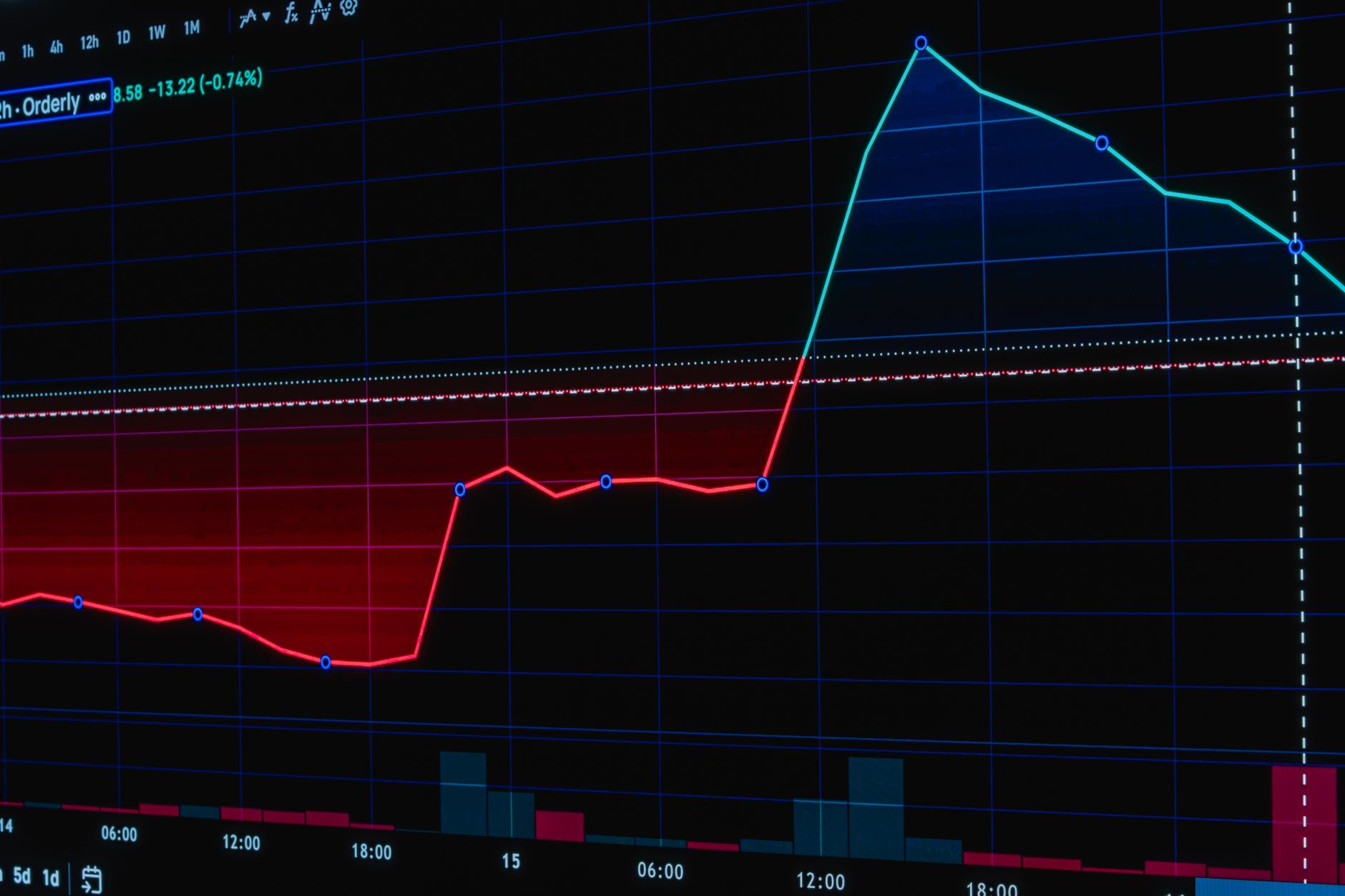
Trading performance dashboard widgets are visual components that display key trading data and analytics, offering traders an immediate overview of their trading activity and profitability. These widgets transform raw trading data into actionable insights, allowing for quick assessment of performance against goals.
- Essential widgets provide real-time insights into trading profitability and risk.
- Key performance metrics help identify strengths, weaknesses, and trading opportunities.
- A well-designed trader dashboard enhances decision-making and strategy refinement.
- Focus on widgets that directly reflect your trading style and objectives.
- Verified performance data is crucial for prop firms and investors.
Why You Need a Trading Performance Dashboard
In the fast-paced world of trading, relying on gut feelings or sporadic manual checks is a recipe for disaster. A robust trading performance dashboard acts as your central command center, consolidating critical information into an easily digestible format. It’s not just about seeing your profit and loss (P&L); it’s about understanding the *why* behind your results.
For retail traders aiming to prove their edge to proprietary trading firms or attract investors, a transparent and detailed performance record is non-negotiable. Platforms like MyVeridex specialize in creating these verified track records directly from your broker data, offering a modern alternative to tools like Myfxbook. They support a wide range of brokers and platforms, including cTrader, DXTrade, Match-Trader, TradeLocker, MT4, and MT5, connecting via a secure, read-only investor password. This ensures your data is accurate and tamper-proof, a requirement for many funding challenges and investment pitches.
A well-structured performance metrics display allows you to:
- Identify profitable patterns and strategies.
- Pinpoint underperforming trades or market conditions.
- Monitor risk exposure in real-time.
- Track progress towards specific trading goals.
- Demonstrate consistency and discipline to external parties.
7 Essential Trading Performance Dashboard Widgets
Selecting the right widgets for your trader dashboard is key to gaining meaningful insights. Here are seven essential components that provide a comprehensive view of your trading performance:
1. Overall Profit and Loss (P&L) Summary
This is the most fundamental widget. It provides a quick snapshot of your total earnings or losses over a specified period (e.g., daily, weekly, monthly, or all-time). Look for widgets that allow you to view P&L in both absolute currency and percentage terms.
Why it's essential: It’s the ultimate bottom line. However, P&L alone doesn't tell the whole story. High profits can be misleading if achieved with excessive risk. This widget should be the starting point, leading you to explore other metrics for context.
Actionable Insight: If your P&L is consistently negative, it’s a clear signal to re-evaluate your strategy or risk management. If it’s positive, examine the risk taken to achieve it using other widgets.
2. Equity Curve
The equity curve is a graphical representation of your account’s growth or decline over time. It plots your account equity (balance + open trade floating P&L) against time. A smooth, upward-sloping curve is the ideal, indicating consistent profitability.
Why it's essential: It visually demonstrates the consistency of your trading. A jagged, volatile curve suggests high risk or erratic performance, even if the net P&L is positive. It helps you spot periods of significant drawdowns.
Actionable Insight: Analyze the slope and smoothness of your equity curve. Steep, consistent upward trends are desirable. Sudden drops indicate major losses that need investigation. I've seen accounts with positive net P&L that look like a roller coaster, signaling unsustainable risk-taking (FTMO 2025 trader payout report highlighted the importance of consistent performance).
MyVeridex Feature: MyVeridex generates clear, verifiable equity curves based on your actual broker data, which are invaluable for proving trading consistency.
3. Drawdown Metrics (Max Drawdown & Running Drawdown)
Drawdown measures the peak-to-trough decline in your account equity. Maximum Drawdown (MDD) is the largest such decline experienced historically. Running Drawdown is the current drawdown from the most recent equity peak.
Why it's essential: This is arguably the most critical risk indicator. Many prop firms have strict drawdown limits (e.g., 5% daily, 10% overall). Understanding your drawdown helps you manage risk effectively and stay within these crucial limits. For instance, a trader might have a positive total P&L but be disqualified by exceeding a prop firm's maximum drawdown rule.
Actionable Insight: Aim to keep your maximum drawdown well below any prop firm limits. If your running drawdown is increasing rapidly, it’s a warning sign to reduce position size or stop trading until conditions improve. Use a tool like the Prop Firm Calculator to understand how drawdowns impact your eligibility.
4. Win Rate and Profit Factor
Win Rate: The percentage of profitable trades out of the total number of trades. For example, a 60% win rate means 60 out of 100 trades were profitable.
Profit Factor: The ratio of gross profits to gross losses. A profit factor of 2 means your total profits were twice your total losses.
Why they're essential: These metrics offer different perspectives on profitability. A high win rate doesn't guarantee profitability if losing trades are larger than winning trades. Conversely, a low win rate can be highly profitable if winning trades are significantly larger than losing ones. The Profit Factor provides a more holistic view by considering the magnitude of wins and losses.
Actionable Insight: Aim for a Profit Factor above 1.5. If your win rate is high but your Profit Factor is low, you may need to adjust your risk-reward ratio or stop-loss/take-profit levels. If your win rate is low but Profit Factor is high, ensure you can psychologically handle the number of losing trades.
Example: A trader with a 40% win rate but an average win of 3R (3 times the risked amount) and an average loss of 1R will have a high Profit Factor (approx. 1.6), outperforming a trader with a 70% win rate but an average win of 0.5R and an average loss of 1R (Profit Factor approx. 0.7).
5. Average Win vs. Average Loss (Risk-Reward Ratio)
This widget displays the average amount you win per profitable trade compared to the average amount you lose per losing trade. This is directly related to the Risk-Reward (R:R) ratio.
Why it's essential: It reveals whether your trading strategy is based on taking small risks for potentially large rewards, or vice-versa. A common goal is to have an average win significantly larger than the average loss, even with a sub-50% win rate.
Actionable Insight: If your average loss is consistently larger than your average win, you're fighting an uphill battle. Even a 70% win rate can be unprofitable if your average loss is 2x your average win. Strive for an average win of at least 1.5 times your average loss, ideally higher.
MyVeridex Feature: MyVeridex calculates and displays average win/loss and R:R ratio, allowing you to precisely assess your strategy's effectiveness.
6. Sharpe Ratio / Sortino Ratio
Sharpe Ratio: Measures risk-adjusted return. It calculates the excess return (above the risk-free rate) per unit of volatility (standard deviation). A higher Sharpe Ratio indicates better performance for the amount of risk taken.
Sortino Ratio: Similar to the Sharpe Ratio, but it only considers downside volatility (losses), making it more relevant for traders who are primarily concerned with negative risk.
Why they're essential: These are advanced performance metrics that go beyond simple P&L. They help you understand if your profits are commensurate with the risk you're taking. A high Sharpe Ratio suggests a more efficient trading strategy.
Actionable Insight: Aim for a Sharpe Ratio above 1.0, with 2.0+ considered very good. If your Sharpe Ratio is low despite high returns, it means you achieved those returns through excessive volatility or risk. The Investopedia guide on risk-adjusted returns (2023) emphasizes their importance for serious investors.
7. Trade Frequency and Holding Period
Trade Frequency: How often you enter trades over a given period.
Average Holding Period: The average duration your trades remain open.
Why they're essential: These metrics provide insight into your trading style (e.g., scalping, day trading, swing trading, position trading) and operational efficiency. They also impact transaction costs (spreads, commissions).
Actionable Insight: Ensure your trade frequency and holding period align with your strategy and psychological tolerance. High-frequency trading incurs more costs; long holding periods might expose you to overnight risk. If you're a swing trader but find your average holding period is only a few hours, you might be exiting trades too early. Understanding your pip value is crucial here, which you can calculate using a Pip Calculator.
Choosing the Right Trading KPI Display
Beyond the specific widgets, how you display your trading KPIs is crucial. A cluttered dashboard can be as ineffective as having no dashboard at all. Consider these points:
- Clarity and Simplicity: Use clear labels, intuitive charts, and avoid overwhelming the user with too much data at once.
- Customization: The best dashboards allow you to customize which widgets are displayed and their layout. This lets you prioritize the metrics most important to your trading style.
- Timeframes: Ensure you can easily switch between different timeframes (daily, weekly, monthly, yearly) for analysis.
- Verification: For prop firms and investors, the data must be verifiable. Ensure your platform provides immutable records. MyVeridex's core value proposition is verified track records from broker data, making it ideal for this purpose.
A well-organized trader dashboard should empower you, not confuse you. Think of it as a flight deck, every instrument has a purpose, and together they provide a complete picture of your trading journey.
Frequently Asked Questions
What are the most important trading KPIs for prop firms?
Can I use an investor password to connect my account to a performance dashboard?
How often should I check my trading performance dashboard?
What is a good Profit Factor for a trader?
Track your trades like a professional
Connect any MT4, MT5, cTrader, DXTrade, Match-Trader or TradeLocker account — get 30+ metrics and a verified public track record.
Start Free 7-Day Trial